WhatsApp:
Chat on WhatsApp 008619112802244
Email:
sales@medfurni.com
The Complete Procurement Guide to Nurses Carts and Medical Treatment Carts
For facility managers and clinical procurement officers, selecting the right mobile medical carts is a critical decision impacting workflow efficiency, staff safety, and patient care standards. This guide provides a comprehensive, B2B-focused analysis of key cart types—from nurse server carts to ER carts—detailing commercial specifications, compliance considerations, and total cost of ownership to inform your institutional purchasing strategy.
Core Specifications for Hospital Bedside Carts and Nurse Server Carts
This category encompasses the workhorses of daily patient care. Understanding the specifications ensures you procure carts that meet rigorous clinical demands.
-
Optimizing Medication Management with the Med Cart
A dedicated med cart is paramount for secure and efficient medication administration. Key features include controlled-access locking compartments, narcotics cabinets, and organized bin systems for patient-specific dosing. Look for carts built with commercial-grade materials that withstand frequent sanitization and heavy daily use in high-traffic nursing units.
-
The Versatility of the Nurse Server Cart for Point-of-Care
The modern nurse server cart functions as a mobile nursing station. Beyond medication, it must accommodate computers, scanners, and supplies. Prioritize models with robust battery management for EHR access, adjustable work surfaces, and secure storage for sensitive patient information, directly supporting improved workflow at the hospital bedside.
Specialized Applications: Medical Treatment Carts, Dressing Trolleys, and ER Carts
Different clinical scenarios require specialized equipment. This section breaks down the features essential for targeted procedures and emergency response.
-
Procedure-Ready: The Hospital Dressing Trolley and Treatment Trolley
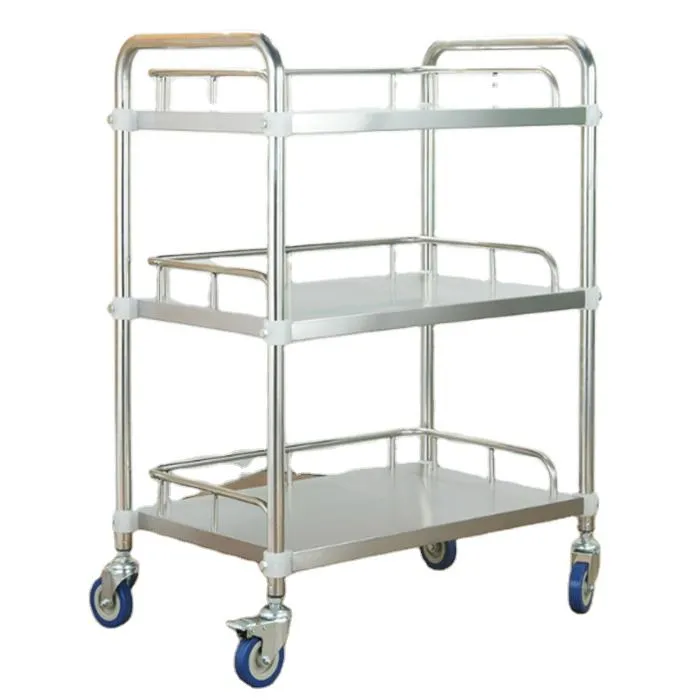
A hospital dressing trolley or treatment trolley must prioritize sterility and organization. Seek seamless surfaces for easy cleaning, stainless steel construction for durability, and clearly partitioned trays for sterile and contaminated materials. These medical treatment carts are fundamental for wound care, catheter insertion, and other bedside procedures, requiring compliance with industry standards for cleanability.
-
Rapid Response Capabilities of the ER Cart
The ER cart (often a crash cart or emergency procedure cart) is mission-critical. Its procurement focuses on immediate accessibility and reliability. Features must include clear, standardized compartmentalization for life-saving equipment (defibrillator, airway management tools, drugs), bright lighting, and fail-safe locking mechanisms. Durability testing under simulated emergency conditions is a key selection criterion.
Procurement and Value Analysis for Institutional Buyers
Moving beyond specifications, this section focuses on the financial and operational evaluation framework for medical treatment carts and hospital bedside carts.
Consider developing a procurement checklist that includes:
-
Total Cost of Ownership (TCO): Evaluate initial price against maintenance costs, expected lifespan, and part replacement availability.
-
Workflow Integration: How does the cart design (e.g., nurse server cart with EHR compatibility) reduce staff steps and improve care delivery time?
-
Supplier Qualification: Partner with established suppliers like Hengyuan Medical who understand commercial-grade requirements, offer customization, and provide documentation for safety and material standards.
FAQ for Institutional Buyers and Dealers
-
Q: What are the key differences between a standard nurses cart and a specialized treatment trolley?
-
A: A general nurses cart is designed for multi-purpose daily tasks (meds, supplies, documentation). A treatment trolley or dressing trolley is specifically engineered for procedural use, with features like bowl holders, waste disposal integration, and surfaces optimized for maintaining a sterile field during medical treatment.
-
-
Q: How important is mobility and ergonomics when selecting a med cart or hospital bedside cart for high-use units?
-
A: Paramount. Poor mobility increases staff fatigue and injury risk. Evaluate caster quality (quiet, swiveling, with braking), push handle height, and overall weight distribution. Ergonomic design is a critical commercial-grade feature that impacts long-term operational costs and staff well-being.
-
-
Q: Can ER carts and other medical carts be customized to our hospital’s specific protocols and space constraints?
-
A: Yes, reputable suppliers offer significant customization. This can include drawer configurations tailored to your emergency drug/formulary, specific branding or color-coding for different departments, and modular accessories to adapt a base hospital bedside carts platform for various uses, ensuring optimal efficiency.
-
Conclusion & Call to Action
Selecting the right mobile medical cart is an investment in clinical efficiency and care quality. By focusing on commercial-grade construction, adherence to industry standards, and a clear-eyed analysis of total cost of ownership, healthcare facilities can make strategic procurement decisions.
Ready to specify the ideal carts for your facility? Contact the experts at Hengyuan Medical for a customized consultation and to review our catalog of durable, workflow-optimized nurses carts, medical treatment carts, and ER carts designed for the demands of modern healthcare institutions.
WhatsApp:
Chat on WhatsApp 008619112802244
Email:
sales@medfurni.com