WhatsApp:
Chat on WhatsApp 008619112802244
Email:
sales@medfurni.com
The Ultimate Guide to IV Carts: Procurement and Standards for Healthcare Facilities
For facility managers, procurement officers, and dealers, selecting the right medical IV cart is a critical operational decision. It impacts clinician workflow, patient safety, and long-term equipment costs. This definitive guide provides a commercial-grade evaluation framework, focusing on durability, compliance, and total cost of ownership to help institutional buyers make an informed IV carts procurement decision.
Key Specifications and Commercial Standards for IV Carts
This section breaks down the essential features and industry standards that define a reliable, professional IV cart on wheels for hospital and clinic use.
-
Construction, Durability, and Weight Capacity
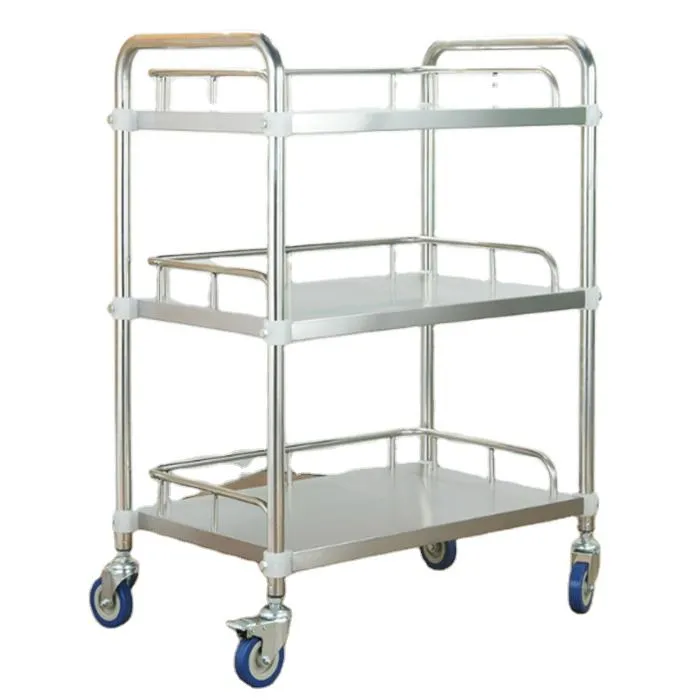
A commercial-grade cart IV must withstand constant, heavy-duty use. Look for all-welded steel or aluminum frames with reinforced joints. Pay close attention to the weight capacity rating, which should significantly exceed the typical load of IV pumps, monitors, and supplies. Units designed for bariatric care or multiple infusion pumps require even higher commercial specifications. Surfaces should be easy to clean and resist corrosion from disinfectants.
-
Safety, Stability, and Maneuverability
The core function of an IV cart on wheels is safe, stable transport. Evaluate the wheelbase width and the quality of the locking casters. Larger, dual-wheel casters provide better stability and roll more smoothly over thresholds and cords. Ensure the cart has a low center of gravity and positive-action brakes on at least two wheels. Durability testing should verify that the unit does not tip under load during turns or on inclines.
Compliance, Configuration, and Procurement Considerations
Moving beyond basic specs, smart procurement involves matching the cart to clinical workflows and understanding long-term value.
-
Compliance with Industry Standards and Infection Control
Ensure the IV cart model complies with relevant industry standards for medical equipment. Surfaces and materials should be non-porous and compatible with hospital-grade disinfectants. Designs should minimize dust-collecting crevices. For facilities with specific protocols, consider configurations with sharps disposal or sealed compartments.
-
Configurations and Total Cost of Ownership (TCO)
Evaluate configurations: standard pole models, carts with shelving for supplies, or those with dedicated slots for specific pump brands. The true cost of an IV carts fleet isn’t just the purchase price. Calculate Total Cost of Ownership by factoring in expected lifespan, maintenance requirements (like caster replacement), and cleaning time. A higher initial investment in a commercial-quality unit often yields a lower TCO.
FAQ for Institutional Buyers and Dealers
-
Q: What is the primary difference between a standard IV cart and a heavy-duty commercial IV cart?
A: The difference lies in construction, capacity, and testing. Commercial IV carts are built with thicker-gauge materials, have higher weight ratings (often 300-500 lbs+), and undergo rigorous durability testing for stability and frame integrity. They are designed for 24/7 use in high-traffic environments like hospitals, whereas lighter models may suffice for low-volume clinics. -
Q: How many IV carts should our facility purchase, and what is a typical procurement timeline?
A: Develop a procurement checklist based on unit count (e.g., per patient room, per department) and shift requirements. Consider a phased rollout. For standard models, lead time from a reliable supplier like Hengyuan Medical can be 4-8 weeks; custom configurations may take longer. It’s advisable to pilot a few units to assess workflow integration before a full fleet purchase. -
Q: What are the key maintenance points for an IV cart on wheels to ensure longevity?
A: Regular maintenance is crucial for safety and total cost of ownership. Primary focus areas are the casters and brakes. Clean casters weekly to remove hair and debris, and check that brakes engage firmly. Periodically inspect the IV pole clamp and shelf fasteners for tightness. Following the manufacturer’s maintenance schedule for your cart IV fleet prevents premature failure and safety hazards.
Conclusion & Next Steps
Selecting the optimal IV cart requires balancing immediate clinical needs with long-term operational value. By prioritizing commercial-grade construction, safety compliance, and a calculated total cost of ownership, healthcare facilities can secure equipment that enhances efficiency and stands the test of time.
Ready to evaluate your options? Contact Hengyuan Medical today to request a detailed specification sheet and a customized procurement checklist for your facility’s IV carts needs.
WhatsApp:
Chat on WhatsApp 008619112802244
Email:
sales@medfurni.com