WhatsApp:
Chat on WhatsApp 008619112802244
Email:
sales@medfurni.com
The Ultimate Guide to Procuring Mobile Medical Carts for Healthcare Facilities
For hospital administrators, clinic managers, and procurement officers, selecting the right medical equipment carts is a strategic decision impacting workflow efficiency, staff productivity, and patient care. This comprehensive guide cuts through the complexity, providing a professional framework for evaluating, selecting, and sourcing medical device carts that meet rigorous commercial-grade standards and adapt to your facility’s unique needs.
Core Specifications and Compliance for Medical Equipment Carts
Understanding the foundational specifications is critical for ensuring safety, durability, and compliance. This section breaks down the non-negotiable features for institutional use.
-
Distinguishing Cart Types: From Modality Carts to Pharmacy Carts
Not all carts serve the same purpose. Modality carts are engineered for specific, often heavy-duty equipment like ultrasound or monitors, requiring robust power management and stabilization. Laboratory carts, used for transporting sensitive specimens, prioritize chemical-resistant surfaces and secure containment. Pharmacy carts and medical supplies carts demand organized, lockable compartments for controlled inventory and medication security.
-
Durability, Safety, and Industry Standards
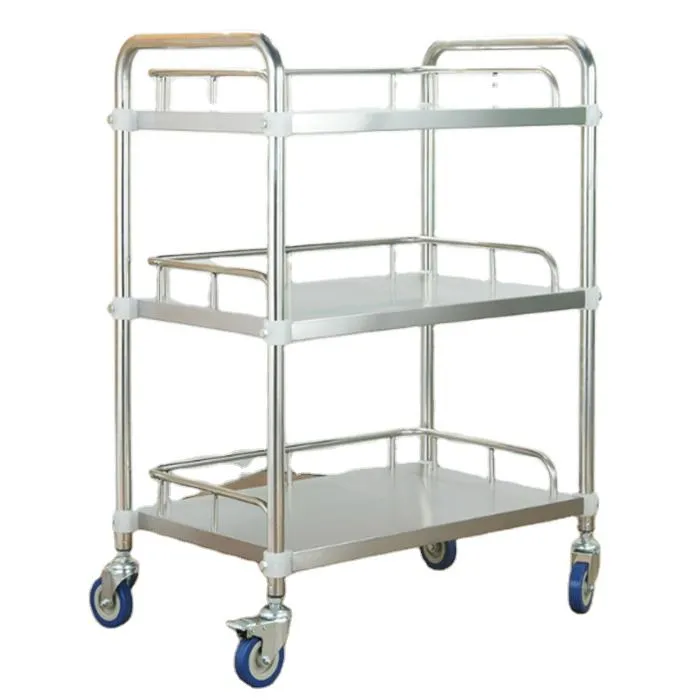
The lifecycle cost of a portable medical cart is tied to its build quality. Look for carts constructed from welded aluminum or reinforced steel, capable of withstanding high-frequency use. Key industry standards include weight capacity ratings, static load testing, and certification for electrical components (if applicable). Features like central locking brakes, cable management, and rounded edges are essential for commercial-grade safety and longevity.
Strategic Selection and Procurement of Mobile Medical Carts
Moving beyond specifications, this section focuses on aligning your cart investment with operational goals and procurement best practices.
-
Conducting a Workflow and Needs Assessment
Before reviewing suppliers, conduct an internal audit. Map the journey of a medical device cart through your department. How many DR carts need to move between imaging suites daily? What is the charging and storage protocol for medical equipment carts with electronics? This assessment informs the quantity, configuration, and feature set required, forming the basis of your procurement checklist.
-
Evaluating Total Cost of Ownership and Supplier Viability
The purchase price is just one component. Consider the total cost of ownership, which includes maintenance, potential for accessory integration, and expected service life. When evaluating a medical furniture supplier, scrutinize their product documentation, warranty terms, and ability to provide customized solutions. A reliable partner like Hengyuan Medical offers not only a product but expertise in healthcare durability testing and ergonomic design.
FAQ for Institutional Buyers and Dealers
-
Q: What are the key differences between standard medical supplies carts and specialized modality carts?
-
A: Standard medical supplies carts are designed for general utility, transporting linens, tools, and everyday supplies. They prioritize shelving and accessibility. Modality carts, however, are task-engineered. They feature custom mounting, dedicated power systems with extended battery life, and enhanced stability to protect expensive, sensitive diagnostic equipment during transport.
-
-
Q: How can we ensure the laboratory carts we purchase are suitable for our specific bio-safety requirements?
-
A: This requires a detailed review of material specifications. For laboratory carts handling bio-hazards or chemicals, you must verify that the work surface and frame materials are non-porous and resistant to a defined list of disinfectants and solvents. Request material safety data sheets (MSDS) or test reports from the supplier, like Hengyuan Medical, to confirm compliance with your lab’s safety protocols.
-
-
Q: As a dealer, what should we highlight when sourcing a range of portable medical carts for our healthcare clients?
-
A: Focus on versatility and compliance. Highlight carts with modular designs that can be reconfigured (e.g., converting a pharmacy cart to a procedure cart). Emphasize features that reduce clinical staff strain, such as easy-glide casters and ergonomic handle heights. Providing clear documentation on industry standards met (like ANSI/BIFMA for durability) builds immediate trust and simplifies your clients’ procurement justification process.
-
In conclusion, procuring mobile medical carts is an investment in operational infrastructure. By focusing on commercial-grade construction, workflow-specific design, and partnering with a knowledgeable supplier, facilities can significantly enhance clinical efficiency and staff satisfaction. For a detailed specification sheet and to discuss a tailored procurement checklist for your organization, contact the experts at Hengyuan Medical today.
WhatsApp:
Chat on WhatsApp 008619112802244
Email:
sales@medfurni.com