WhatsApp:
Chat on WhatsApp 008619112802244
Email:
sales@medfurni.com
The Ultimate Guide to Procuring Anesthesia Carts and Surgical Procedure Carts for Healthcare Facilities
For hospital procurement officers, surgical department heads, and medical equipment dealers, selecting the right anesthesia carts and surgery cart systems is a critical operational decision. The right mobile storage solutions directly impact OR turnover time, clinician efficiency, and patient safety. This definitive procurement guide from Hengyuan Medical breaks down the specifications, standards, and total cost of ownership considerations for medical procedure carts, surgical instrument carts, and treatment carts to inform your capital equipment strategy.
Core Specifications and Commercial Standards for Anesthesia and Surgical Carts
This section focuses on the physical and functional attributes that define professional-grade mobile units for clinical environments.
-
Anesthesiologist Cart and Anesthesia Workstation Configurations
A dedicated anesthesiologist cart is the command center for patient vitals and medication delivery. Key features for B2B evaluation include lockable narcotic drawers, integrated power for monitors, gas cylinder management, and ample workspace. Variations like a compact anaesthesia cart for outpatient clinics or a robust multi-tier system for major ORs must be matched to procedural volume. Compatibility with standard anaesthetic cartridge systems is a non-negotiable for medication safety and efficiency.
-
Surgical Instrument Cart and Case Cart Durability & Hygiene
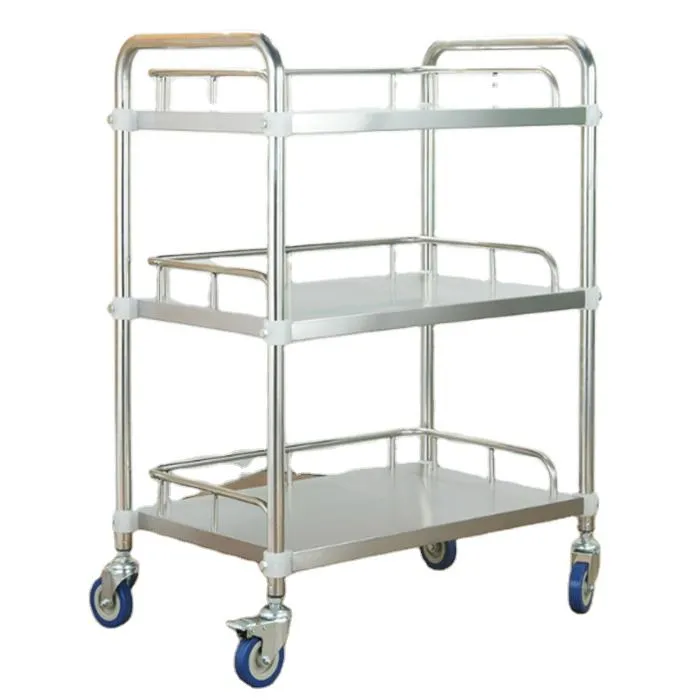
The surgical case cart system is the backbone of sterile supply chain within the hospital. When evaluating surgical instrument carts and surgical instrument carts for bulk storage and transport, focus on surgical trolley stainless steel construction. Look for grade 304 or 316 stainless steel with electropolished finishes that resist corrosion, facilitate deep cleaning, and withstand automated washer-disinfector cycles. Instrument trolley designs should offer customizable interiors with tray slides, peg hooks, and partitions to organize delicate instruments by procedure.
Evaluating Surgery Cart and Procedure Cart Workflow Integration
Beyond build quality, the value of a cart lies in its seamless integration into clinical workflows, from pre-op to post-op.
-
Mayo Cart and Procedure Carts for Point-of-Care Efficiency
The classic mayo cart remains indispensable for holding immediate-use instruments and supplies during surgery. Modern procedure carts and medical procedure carts expand this concept, serving as mobile procedural stations for endoscopy, catheterization, or wound care. For procedure and medical carts, assess modular accessories like IV pole attachments, sharps containers, and bracket systems for specific equipment to create a unified treatment cart station.
-
Trolley for Instruments and Medical Treatment Carts: Ergonomic & Safety Features
Mobility and safety are paramount. Every trolley for instruments and medical treatment cart must be evaluated on its maneuverability. Key features include large, dual-swivel casters with central locking (some conductive for OR use), ergonomic push handles, and a low center of gravity to prevent tipping when loaded. For surgical trolley stainless steel units, rounded corners and burr-free edges are critical for staff and patient safety.
Procurement Checklist and Value Analysis for Institutional Buyers
This section translates product features into purchasing criteria and long-term value, covering the concerns of hospital committees and dealers.
Focus your evaluation on:
-
Compliance & Certification: Verify carts meet relevant FDA (if applicable), ISO, and AAMI standards for medical devices. Documentation is key.
-
Durability Testing Data: Request lifecycle test reports (e.g., caster roll-over, load capacity, finish integrity) from manufacturers.
-
Total Cost of Ownership (TCO): Calculate not just unit price, but costs for maintenance, potential repairs, and compatibility with your existing sterilization infrastructure.
-
Vendor Reliability: Partner with established suppliers like Hengyuan Medical who offer comprehensive warranties, accessible spare parts catalogs, and can provide references from similar-sized facilities.
FAQ for Institutional Buyers and Dealers
-
Q: What is the primary difference between a standard medical procedure cart and a dedicated anesthesiologist cart?
A: The core difference lies in specialization and configuration. A medical procedure cart is often a versatile, modular unit designed for general clinical tasks, with cleanable surfaces and adjustable shelves. An anesthesiologist cart is a highly specialized workstation pre-configured with features like secure medication storage, integrated monitor mounts, and gas management systems specifically for anesthesia delivery and patient monitoring, reflecting a higher level of EEAT in clinical workflow design. -
Q: Why is surgical trolley stainless steel the mandated material for surgical instrument carts in central sterile services?
A: Surgical trolley stainless steel, particularly grades 304 or 316, is mandated due to its superior material properties. It is non-porous, highly resistant to chemicals and disinfectants used in sterile processing, can withstand extreme temperatures in washer-disinfectors and autoclaves, and demonstrates exceptional structural durability over thousands of cycles. This ensures compliance with the highest industry standards for infection prevention and equipment longevity. -
Q: For a multi-specialty surgical center procuring procedure carts, should we prioritize standardization or customization?
A: A hybrid approach is recommended for optimal operational and financial efficiency. Standardize the core chassis and material (surgical trolley stainless steel) across all departments to simplify maintenance, training, and parts inventory. Then, customize through modular accessories (e.g., specific tray configurations for orthopedics, basket holders for laparoscopic sets) on a per-specialty basis. This balances the lower total cost of ownership of standardization with the workflow efficiency of tailored treatment carts.
Conclusion & Call to Action
Selecting the right suite of anesthesia carts, surgical case carts, and medical treatment carts is an investment in clinical efficiency and patient care standards. By focusing on commercial-grade construction, workflow-specific design, and vendor partnership, healthcare facilities can build a reliable, compliant mobile equipment fleet.
Ready to specify or request a quote for procedure carts configured to your facility’s needs? Contact the Hengyuan Medical team today for detailed product specifications, compliance documentation, and to schedule a consultation with our clinical workflow specialists.
WhatsApp:
Chat on WhatsApp 008619112802244
Email:
sales@medfurni.com